
Address: Home > News > Technical Documentation >
Selection specification for 135 degree silicone bend working condition of engineering machinery heat dissipation pipeline
Time:2026-08-05 11:48:50 Author:Lingyongtai Clicks:76Second-rate
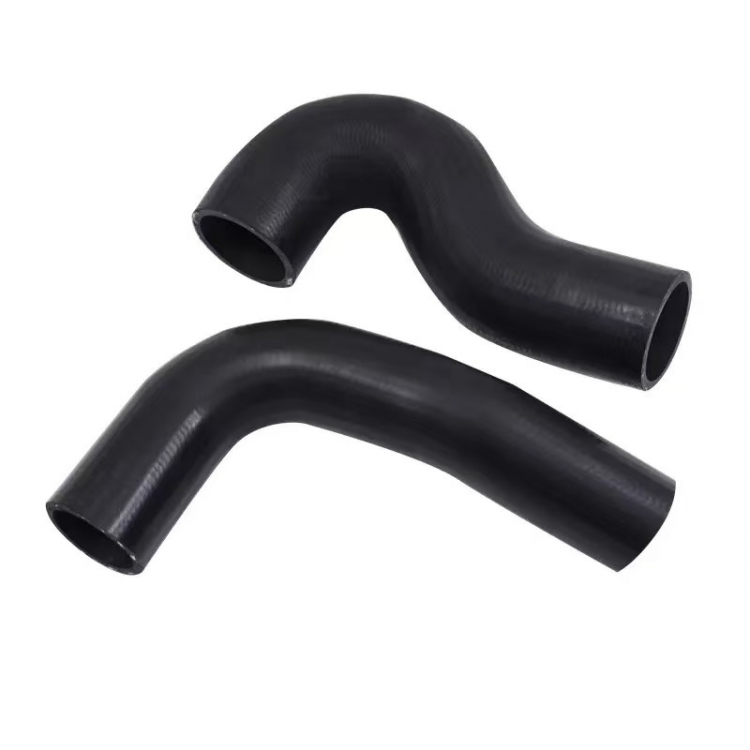
This specification is applicable to the working condition adaptation judgment, specification selection, structural matching, and on-site assembly reference of 135 ° silicone bend pipes used in various engineering machinery heat dissipation systems. Construction machinery includes engineering equipment such as loaders, excavators, rollers, forklifts, etc. The layout of the equipment's heat dissipation pipelines is complex, and there are many inclined corner points. Conventional straight hoses and 90 ° right angled bends are difficult to adapt to some inclined wiring structures. 135 ° obtuse angle silicone bend pipe is a specialized adapter for heat dissipation systems, suitable for equipment oblique pipeline transition scenarios, and can adapt to the medium circulation requirements of cooling water and intercooler pipelines. This article clarifies the standardized selection process through dimensions such as working condition classification, structural matching, specification screening, and scenario adaptation, providing technical basis for equipment maintenance, pipeline matching, and accessory replacement.
The basic working conditions of engineering machinery heat dissipation pipelines have usage characteristics that are different from ordinary passenger vehicles. The equipment operates for a longer period of time, and the pipelines are continuously in a working state of temperature fluctuations, mechanical vibrations, and load fluctuations. At the same time, the equipment operating environment includes external factors such as outdoor sun exposure, dust coverage, water vapor infiltration, and oil pollution adhesion, which have corresponding requirements for the material tolerance and structural deformation resistance of the pipelines. The cooling system pipeline mainly undertakes the functions of coolant circulation and heat exchange. The fit and material state of the pipeline structure will directly affect the continuity of the cooling system medium circulation. Therefore, in the selection stage, it is necessary to comprehensively judge the equipment working conditions, installation space, and pipeline parameters.
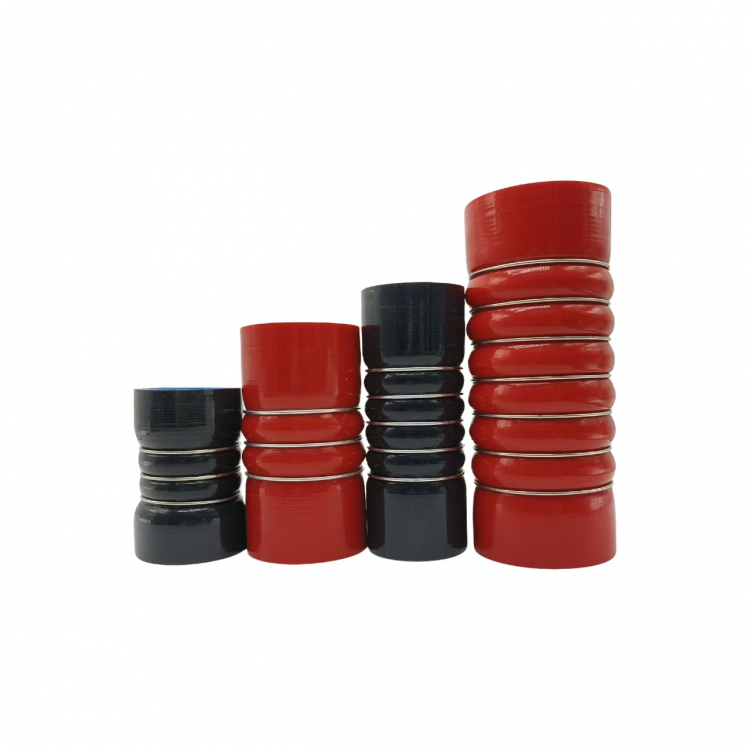
Based on the differences in working conditions and environments, the heat dissipation scenarios of construction machinery can be divided into two categories: conventional working conditions and complex working conditions, corresponding to different structures of 135 ° silicone bend pipes. Conventional working conditions are suitable for engineering equipment with intermittent operations, low environmental dust and oil pollution, and smooth load fluctuations. The temperature and pressure range of the pipeline is relatively stable, and a standard single-layer silicone structure 135 ° bend pipe can be selected to meet the needs of daily heat dissipation pipeline transfer and circulation, and is suitable for routine equipment maintenance and replacement scenarios. Complex working conditions are suitable for equipment scenarios with long-term continuous operation, large chassis vibration amplitude, and high environmental impurities. A multi-layer fiber woven composite structure style should be selected, relying on internal woven interlayers to enhance the strength of the pipe wall structure and adapt to the working environment of long-term vibration and frequent temperature switching.
The structural selection should be in line with the installation space and wiring method of the equipment pipeline. The core adaptation advantage of the 135 ° obtuse angle structure is a smooth transition in the routing. Compared to right angled bends, the bending amplitude of the pipeline is smaller, and the transition interval for medium flow is longer, which can reduce local stress concentration in the pipeline. At installation points with narrow engine compartments, dense pipelines, and diagonal connections, it is preferred to use standardized 135 ° molded bends instead of manually bending hoses to avoid flow abnormalities caused by pipeline twisting, compression, and flattening. When selecting, it is necessary to check the transition radius of the bent pipe, the length of the straight pipe section, and the installation clearance to ensure that the pipeline maintains a reasonable distance from the surrounding wire harness, shell, and mechanical structure, and to reduce friction interference.
The selection of specification parameters must strictly refer to the original factory pipeline benchmark data of the equipment. The core verification parameters include the inner diameter of the pipeline, the thickness of the pipe wall, the length of the straight pipe section, and the transition size of the bending angle. The inner diameter needs to match the specifications of the original factory connector to ensure that the pipeline is inserted and fitted tightly, with even gaps, and to avoid situations where the seal is not tight due to size deviations. The thickness of the pipe wall is selected according to the working load. The standard thickness is suitable for conventional heat dissipation cycle working conditions, and the thickened composite pipe wall is suitable for high-frequency operation and equipment scenarios with large pressure fluctuations. The length of the straight pipe section needs to meet the basic space for the installation and fixation of the pipe clamp, ensuring that the assembly is tightened in place and avoiding the problem of loosening and falling off in the later stage. All parameters are selected based on the original factory drawings and measured data of the equipment, without subjective adaptation judgment.
The material selection follows the principle of environmental adaptation, and the corresponding silicone material formula is selected according to the operating environment of the equipment. EPDM (Ethylene Propylene Diene Monomer) silicone material is suitable for outdoor operations, large temperature differences, and high levels of water vapor. It has good aging and weather resistance properties and can resist long-term air oxidation and rainwater immersion. Conventional silicone material is suitable for indoor operations, clean environments, and single medium heat dissipation pipeline scenarios, meeting the basic cooling medium circulation needs. For equipment points with high frequency of oil contact, oil resistant modified silicone formula can be used to slow down the erosion of oil on the pipe wall material and maintain the structural state of the pipeline for long-term use.
Standardized component selection can adapt to the long-term stable operation requirements of engineering machinery cooling systems, and fit the high-intensity and long-term operational characteristics of engineering equipment. The obtuse angle structure of the 135 ° shaped silicone bend tube can adapt to most inclined pipeline routing scenarios, and with differentiated structures, materials, and specification systems, it can cover the replacement and matching needs of equipment under different working conditions. Strictly following the selection specifications of this working condition to complete the matching of accessories can improve the fitting degree of pipeline assembly, maintain stable circulation of the cooling system medium, reduce the frequency of pipeline losses, and provide standardized accessory support for the daily operation and maintenance of various engineering machinery cooling systems.